
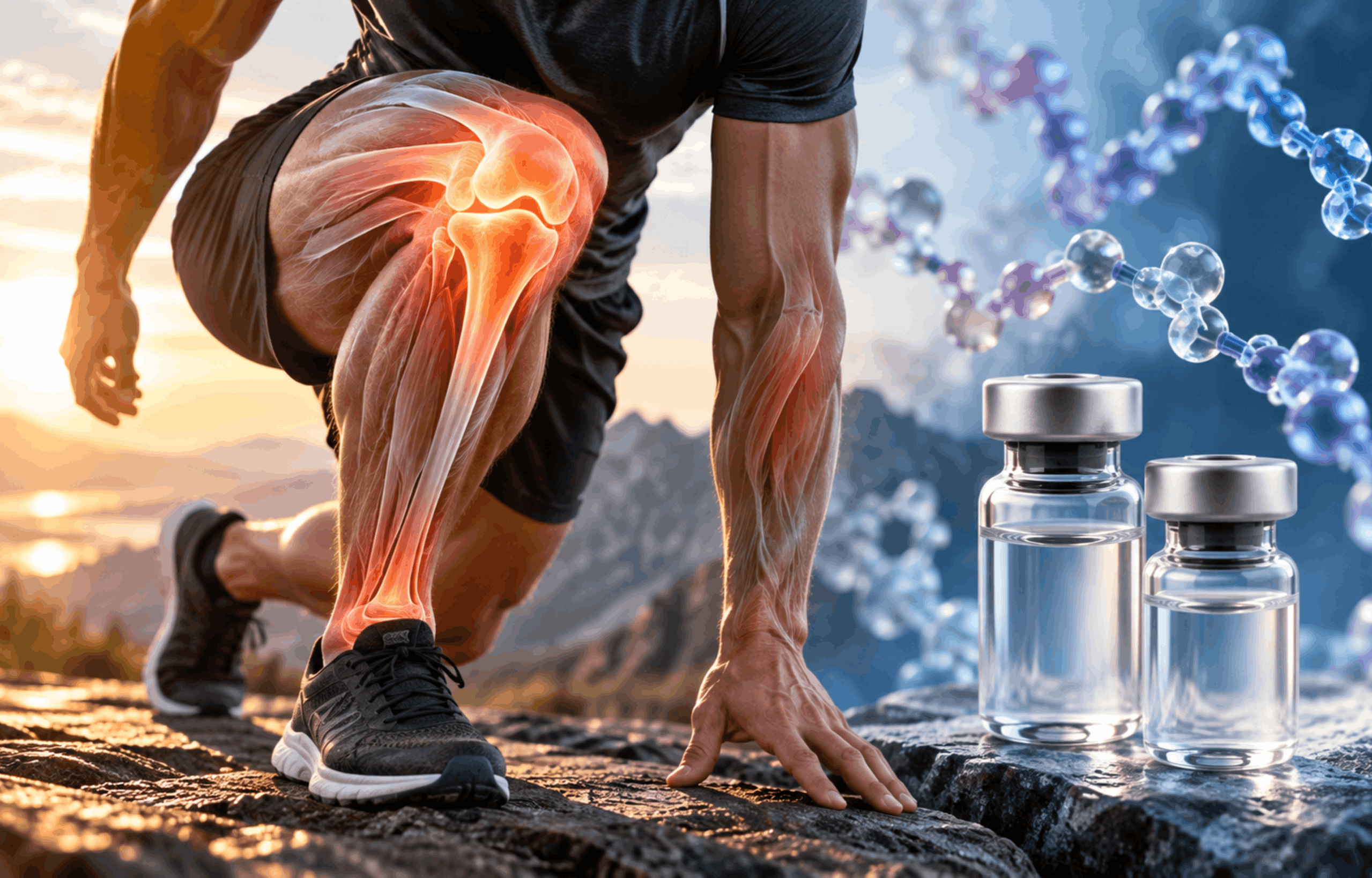
Wolverine Stack Peptide: A Smarter Approach to Recovery?
Overview
There is a point where pushing harder stops being the answer. You may still train regularly and stay active, yet notice that your body takes longer to settle after exercise. Soreness hangs around, an old injury starts bothering you again, or you simply need more time between workouts.
That is when recovery becomes just as important as exercise itself. The Wolverine Stack has become part of that conversation because it combines two peptides, BPC-157 and TB-500, that are being studied for their possible role in tissue repair and recovery.
The name sounds dramatic, but the idea is simple: help support the processes your body already uses to recover.
What Is the Wolverine Stack?
The Wolverine Stack combines BPC-157 and TB-500. Both are peptides, which are small chains made from amino acids, the building blocks your body uses to make proteins and perform many normal functions.
These peptides have gained attention because early research suggests they may influence processes involved in healing and tissue repair. This is why they are often discussed in relation to muscles, tendons, joints, and physical recovery.[1][2]
Human evidence is still limited, so the Wolverine Stack should only be taken as a support, not as a guaranteed fix.
Why Are People Interested in It?
Most people looking into the Wolverine Stack are not trying to become elite athletes. They simply want to stay active without feeling as though every workout takes several days to recover from.
Recovery can become slower for many reasons. Age, poor sleep, stress, training intensity, nutrition, and previous injuries can all affect how quickly your body feels ready to go again.
The Wolverine Stack is different from products designed to give you a quick energy boost before exercise. The interest is more about what happens afterwards: how well your body repairs itself and prepares for the next round of activity.
What Does BPC-157 Do?
BPC-157 is probably the better-known peptide in the stack. Researchers have been particularly interested in its possible effects on tendons, muscles, ligaments, and other tissues involved in movement.
Laboratory studies suggest that BPC-157 may help certain tendon cells move and survive during the healing process.[1] A 2025 review also examined 36 studies involving BPC-157 in sports and orthopedic medicine. Although several findings were promising, 35 of those studies were laboratory or animal studies rather than larger human trials.[2]
So, there is a reason BPC-157 attracts attention, but there is still a big difference between promising early research and knowing exactly how well it works in people.
What About TB-500?
TB-500 is related to thymosin beta-4, a naturally occurring peptide that has been studied for its role in healing.
Research suggests that thymosin beta-4 may help with processes such as moving repair cells toward injured tissue and supporting new blood vessel growth.[3] Human studies have also explored thymosin beta-4 in wound healing.[4]
However, TB-500 and thymosin beta-4 are not exactly the same thing. Research on one helps explain why scientists are interested in the other, but it does not prove that they will produce identical results.
Do BPC-157 and TB-500 Work Better Together?
That sounds like the obvious question. If both are connected with recovery, would combining them create better results?
A 2026 animal study compared BPC-157, TB-500, and a combination of both after Achilles tendon injuries in rats. Researchers saw signs of improved healing with the peptides, but using them together did not clearly work better than using the individual treatments in that study.[5]
This does not prove that the combination has no benefit in people. It simply shows why bold claims about the Wolverine Stack being dramatically more effective than either peptide alone should be treated carefully.
Who May Consider the Wolverine Stack?
Interest often comes from people who want to remain active but feel that recovery is becoming more difficult. This may include gym-goers, runners, recreational athletes, or adults noticing that soreness lasts longer than it once did.
People with recurring muscle, tendon, or joint discomfort may also become curious about peptide therapy. However, pain that repeatedly returns should first be properly assessed. An injury that needs treatment should not be mistaken for ordinary post-workout soreness.
For people exploring peptide therapy in Texas, Victory Select provides physician-guided care so that symptoms, medical history, and personal goals can be considered before starting treatment.
How Quickly Can You Expect Results?
There is no reliable timeline that applies to everyone. Online claims promising results within a certain number of days may sound appealing, but human research is not strong enough to support a guaranteed timeframe.
Recovery depends on the type of problem, activity level, age, sleep, nutrition, stress, and general health. Peptide therapy should also not replace the basics. Good sleep, appropriate training, adequate nutrition, and proper rehabilitation remain important parts of recovery.
Is the Wolverine Stack Safe?
Safety is another area where more human research is needed.
A small 2025 pilot study evaluated intravenous BPC-157 in two adults and did not report major problems during the study.[6] However, two people are far too few to establish long-term safety.
Human research on TB-500 is also limited. This is one reason peptide therapy should not be treated like an ordinary supplement. Your medications, health history, current symptoms, and treatment goals all matter.
Recovery Is About Staying in the Game
The Wolverine Stack may have an attention-grabbing name, but most people interested in it have a simple goal: they want their body to keep up with the life they enjoy.
BPC-157 and TB-500 are worth studying because early research suggests they may influence some of the processes involved in tissue repair. At the same time, human evidence remains limited, making realistic expectations and medical guidance important.
Victory Select offers physician-guided care through its Austin-based pharmacy so that peptide therapy can be considered in the context of your individual recovery goals.
If slow recovery or recurring discomfort is keeping you from being as active as you want, schedule your free consultation with Victory Select today to find out whether the Wolverine Stack may be right for you.
References
- Chang CH, Tsai WC, Lin MS, et al. The promoting effect of pentadecapeptide BPC 157 on tendon healing involves tendon outgrowth, cell survival, and cell migration. J Appl Physiol. 2011;110(3):774-780. doi:10.1152/japplphysiol.00945.2010.
- Vasireddi N, Hahamyan H, Salata MJ, et al. Emerging use of BPC-157 in orthopaedic sports medicine: A systematic review. HSS J. 2025;21(4):485-495. doi:10.1177/15563316251355551.
- Goldstein AL, Hannappel E, Kleinman HK. Thymosin beta4: Actin-sequestering protein moonlights to repair injured tissues. Trends Mol Med. 2005;11(9):421-429.
- Treadwell T, Kleinman HK, Crockford D, et al. The regenerative peptide thymosin β4 accelerates the rate of dermal healing in preclinical animal models and in patients. Ann N Y Acad Sci. 2012;1270:37-44.
- Biçer O, Adanir O, Güleryüz Y, et al. Effects of BPC-157 and TB-500 on Achilles tendon healing in rats: A histopathological and biomechanical study. Jt Dis Relat Surg. 2026;37(3):822-837.
- Lee E, Burgess K. Safety of intravenous infusion of BPC157 in humans: A pilot study. Altern Ther Health Med. 2025;31(5):20-24.